
Define the task
Describe the premises, affected area and intended work.
Describe symptoms without opening enclosures or reaching live components. Note the affected area and whether the issue is intermittent. For planned work, prepare room dimensions, fitting details and recent installation changes. Access, isolation and suitability belong to assessment by the responsible qualified professional.
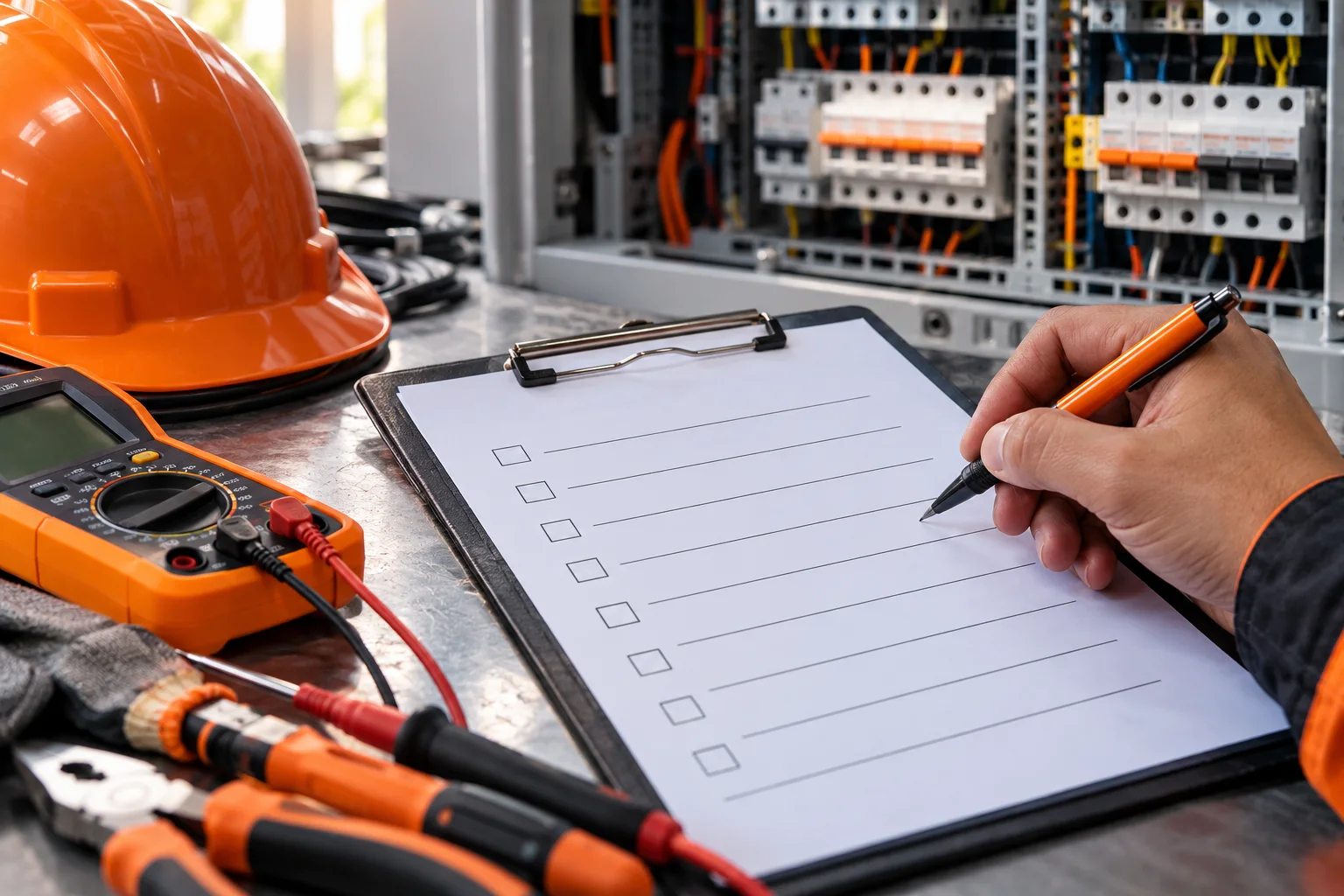
Our working approach connects planning, installation and inspection. A lighting decision affects wiring access; equipment layout changes socket requirements. Bringing these questions together helps avoid fragmented instructions. Technical scope and the practical use of the premises remain connected throughout the work.
Describe the premises, affected area and intended work.
Assess circuits, access and equipment requirements.
Plan access, sequence and interruption arrangements.
Keep work details and maintenance information together.
Describe the topic and the need you would like to discuss. Relevant details help the team respond in the context of your request.
Describe the premises, affected area and intended work.
Socket positions follow room layouts, equipment needs and suitable installation conditions. Existing circuits and protection require assessment. Describe daily use so placement supports access and keeps cables organised.
Lighting combines visibility, atmosphere and practical control. Ceiling conditions, fitting specifications and switching positions influence the work. Compare the intended effect with maintenance access and installation requirements.
Identify the existing installation and proposed changes before work around a distribution board. Circuit information, equipment demand and protective devices require technical review. Consider board alterations together with the connected installation.
Useful fault details include the affected area, when the issue appears and recent alterations. Inspection distinguishes a fitting problem from a wider installation issue. Leave exposed or damaged equipment for qualified assessment.
Lighting combines visibility, atmosphere and practical control. Ceiling conditions, fitting specifications and switching positions influence the work. Compare the intended effect with maintenance access and installation requirements.
Identify the existing installation and proposed changes before work around a distribution board. Circuit information, equipment demand and protective devices require technical review. Consider board alterations together with the connected installation.
Socket positions follow room layouts, equipment needs and suitable installation conditions. Existing circuits and protection require assessment. Describe daily use so placement supports access and keeps cables organised.
Useful fault details include the affected area, when the issue appears and recent alterations. Inspection distinguishes a fitting problem from a wider installation issue. Leave exposed or damaged equipment for qualified assessment.